
How Tax Strategy Builds Long-Term Growth
Many business owners think about taxes once a year.
They gather their documents, send everything to their accountant, file their return, and move on.
But growing businesses need more than annual tax preparation.
As your revenue increases, your team expands, and your financial situation becomes more complex, the decisions you make throughout the year can have a significant impact on your tax position.
That's where tax strategy comes in.
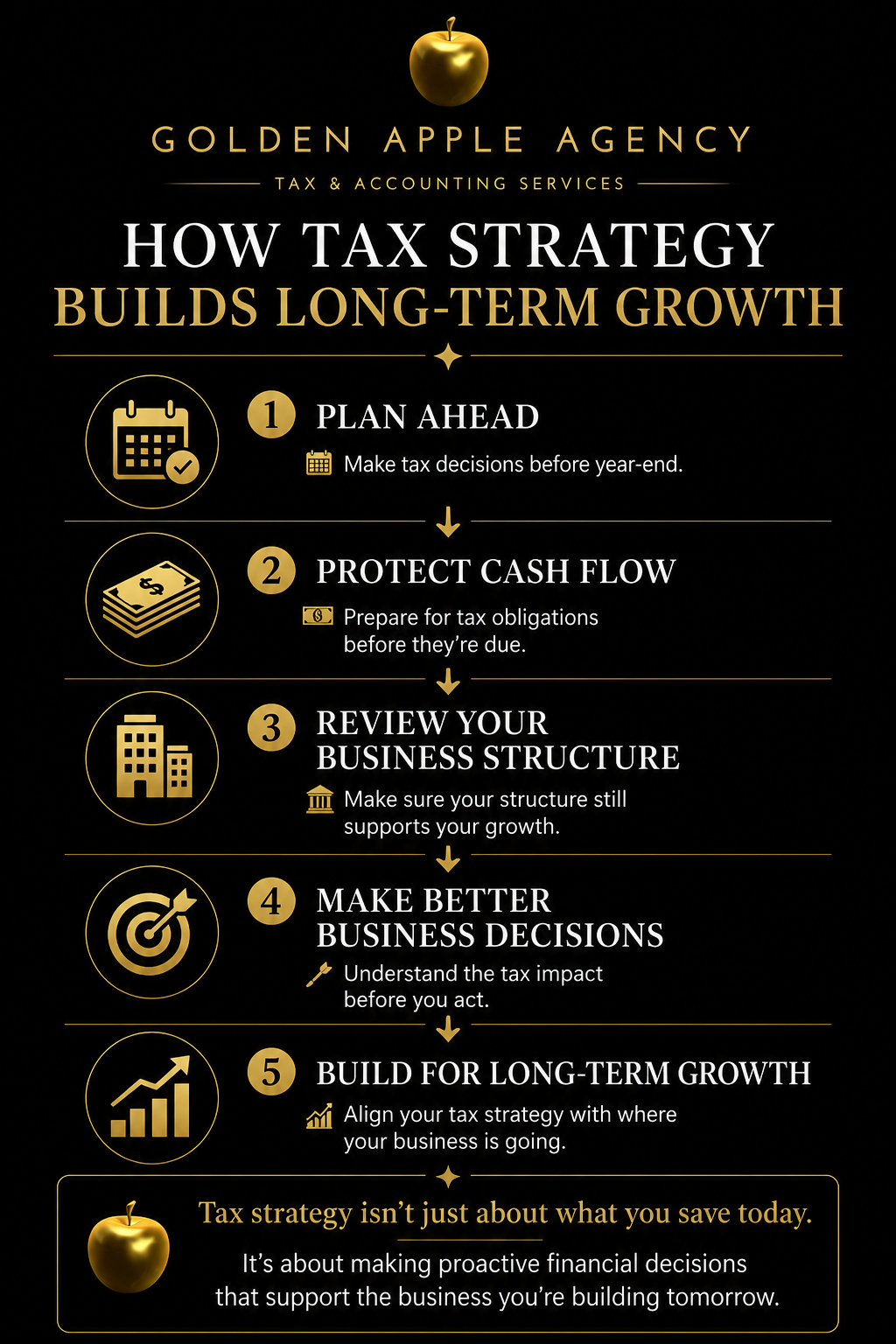
Tax strategy isn't just about reducing your tax bill today. It's about making proactive financial decisions that support where your business is going tomorrow.
The Direct Answer
Tax strategy helps build long-term business growth by allowing business owners to plan ahead, manage cash flow, evaluate business structure, prepare for tax obligations, and make strategic financial decisions throughout the year.
Tax preparation looks backward at what already happened.
Tax strategy looks forward.
When taxes become part of your overall business strategy, you can make decisions with a clearer understanding of their financial impact.
1. Tax Strategy Helps You Plan Ahead
One of the biggest differences between tax preparation and tax strategy is timing.
Tax preparation happens after the financial year is largely over.
Tax strategy happens throughout the year.
Proactive planning allows you to consider questions like:
What will our estimated tax liability look like?
Are we making the right estimated payments?
How could a major purchase affect our tax position?
Should we adjust our strategy before year-end?
How will business growth affect future taxes?
The earlier you understand your potential tax obligations, the more time you have to prepare.
2. It Protects Your Cash Flow
Unexpected tax bills can create significant pressure on a business.
Even profitable companies can experience cash flow problems if they haven't planned for their tax obligations.
Strategic tax planning helps business owners anticipate potential tax liabilities and set aside cash throughout the year.
Instead of scrambling when taxes are due, you can incorporate tax obligations into your cash flow planning.
That means fewer surprises and more financial stability.
3. It Helps You Evaluate Your Business Structure
The way your business is structured can affect how it is taxed.
As your business grows, the structure that worked when you started may not always be the best fit for where you are today.
Depending on your circumstances, it may be worth periodically reviewing whether your current structure still aligns with:
Your revenue
Your profitability
Your compensation
Your growth plans
Your long-term goals
Business structure decisions should consider more than taxes alone, but tax implications are an important part of the conversation.
Regular reviews with qualified tax and legal professionals can help ensure your structure continues to support your business as it evolves.
4. Tax Strategy Supports Better Business Decisions
Taxes are connected to many of the decisions business owners make.
Hiring employees.
Purchasing equipment.
Expanding operations.
Changing compensation.
Investing in retirement.
Each decision can have financial and tax implications.
When tax planning happens before major decisions are made, you have more information available to evaluate the potential impact.
The goal isn't to make every business decision based solely on taxes.
It's to understand the tax consequences before you make the decision.
5. It Creates a Stronger Foundation for Growth
Growth creates opportunity.
It can also create complexity.
As businesses grow, they often experience:
Higher revenue
Larger expenses
More employees
New investments
Increased tax obligations
More complex financial decisions
Without proactive planning, business owners may find themselves reacting to these changes.
Tax strategy allows you to prepare for growth before it happens.
When you understand how your business decisions may affect your tax position, you can build growth plans with greater financial clarity.
Reactive Taxes vs. Strategic Tax Planning
Reactive Tax Approach
Thinks about taxes primarily at filing time
Focuses on what already happened
May be surprised by tax obligations
Makes major decisions without considering tax implications
Reacts to changes as the business grows
Strategic Tax Planning
Reviews taxes throughout the year
Estimates future tax obligations
Incorporates taxes into cash flow planning
Evaluates tax implications before major decisions
Adjusts strategy as the business evolves
Reality Check
A large tax bill doesn't automatically mean your tax strategy is wrong.
And paying less tax isn't always the only measure of a successful strategy.
The goal of tax planning is to make informed decisions, legally identify available tax-saving opportunities, prepare for obligations, and align your tax approach with your broader financial goals.
Sometimes the smartest decision for long-term growth may not produce the largest immediate tax savings.
That's why tax strategy should be connected to the bigger picture.
Your taxes, cash flow, business structure, profitability, and growth plans should work together—not exist as separate conversations.
Ready to Make Tax Strategy Part of Your Growth Plan?
Tax season shouldn't be the first time you think about taxes.
At Golden Apple Agency, we work with established and high-revenue businesses that need a more proactive approach to tax strategy and financial planning.
By looking beyond annual tax preparation, we help business owners better understand their tax position, anticipate future obligations, and make informed decisions that support their long-term goals.
Because sustainable growth isn't just about how much your business earns.
It's about making strategic decisions with the money you've built.
