
Why High-Revenue Businesses Still Overpay in Taxes
Direct Answer
Many high-revenue businesses overpay in taxes because they focus on tax preparation instead of tax strategy.
Generating more revenue doesn't automatically create tax efficiency. Without proactive planning, the IRS receives more of your profits than necessary.
The businesses that keep more of what they earn don't simply make more money—they build intentional tax strategies throughout the year.
Revenue Doesn't Equal Tax Efficiency
Crossing the million-dollar revenue mark is exciting, but it also brings greater financial complexity.
More employees.
More assets.
More deductions.
More opportunities.
Without a strategic plan, those opportunities often become missed savings.
Many successful business owners are shocked to learn they've been legally overpaying taxes for years.
Step 1: They Wait Until Tax Season
The biggest mistake high-revenue businesses make is waiting until their tax return is being prepared.
By then, most tax-saving opportunities are gone.
Proactive tax planning happens every quarter—not every April.
Regular strategy meetings allow businesses to adjust compensation, investments, purchases, and deductions before year-end.
Step 2: They Never Reevaluate Their Entity Structure
Many companies continue operating under the same structure they started with years ago.
As revenue grows, the structure that once made sense may become inefficient.
An outdated entity structure can lead to:
Higher self-employment taxes
Missed deductions
Poor owner compensation planning
Increased audit risk
Lost wealth-building opportunities
Growth should trigger regular tax strategy reviews.
Step 3: They Focus on Revenue Instead of Profitability
Many owners celebrate increasing sales while ignoring tax efficiency.
Revenue creates activity.
Profit creates wealth.
Strategic businesses monitor:
Net profit
Cash flow
Tax liability
Owner distributions
Long-term wealth creation
The goal isn't simply earning more—it's keeping more.
Step 4: They Lack a Strategic Financial Team
Many accountants prepare returns accurately.
Few build year-round tax strategies.
A proactive advisory team reviews financial performance throughout the year and identifies opportunities before deadlines pass.
The difference between compliance and strategy can save businesses tens or even hundreds of thousands of dollars over time.
Step 5: They Miss Advanced Tax Strategies
As businesses grow, more sophisticated planning becomes available.
These strategies may include:
Strategic depreciation planning
Retirement contribution optimization
Accountable plans
Cost segregation opportunities
Entity optimization
Income timing strategies
Family employment strategies
Business succession planning
Without proactive guidance, many of these opportunities are never utilized.
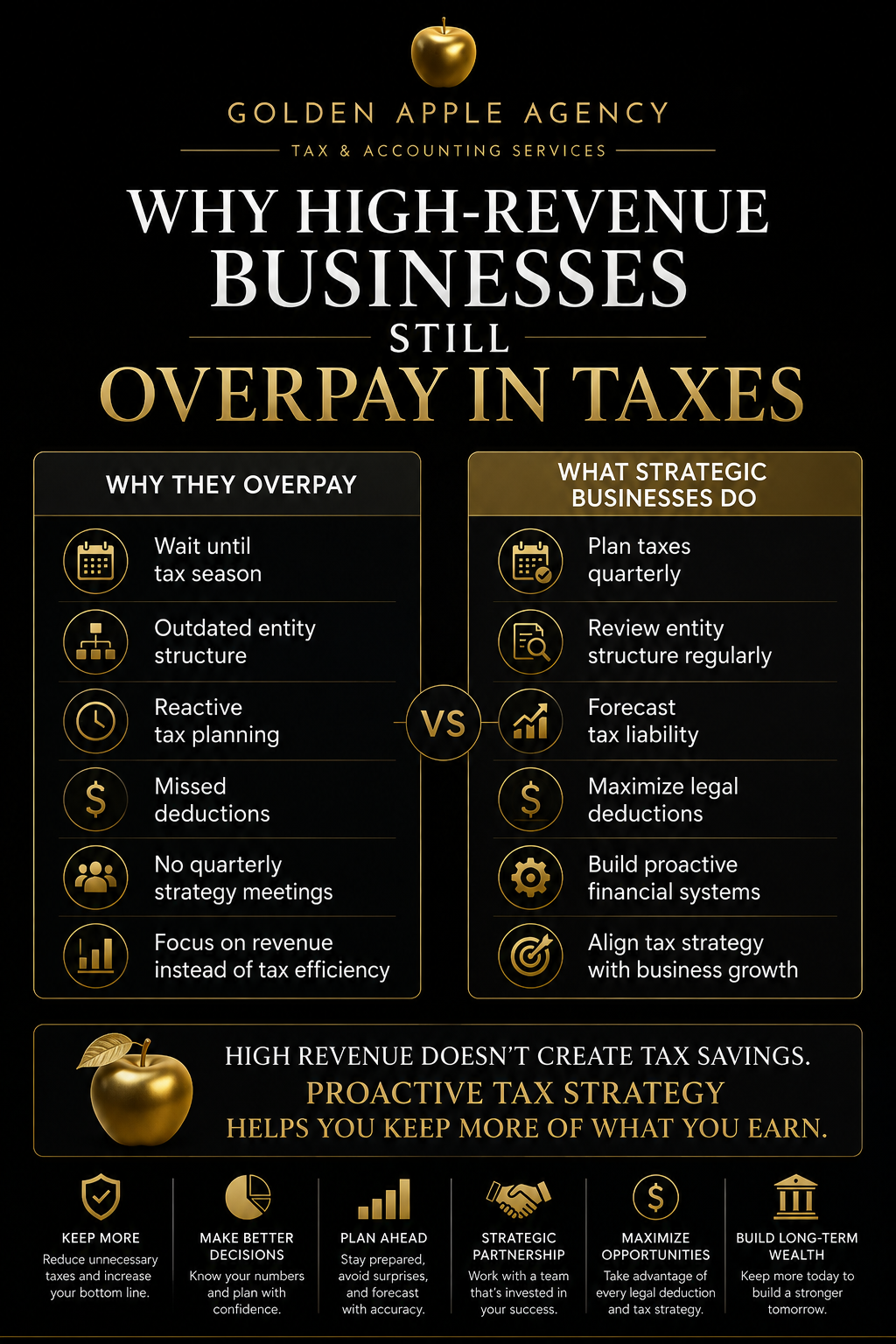
Reactive Tax Planning vs Strategic Tax Planning
Reactive Tax Planning
Meets with CPA once a year
Focuses on filing deadlines
Pays unexpected tax bills
Misses planning opportunities
Operates without forecasting
Reacts after decisions are made
Strategic Tax Planning
Reviews finances quarterly
Plans before year-end
Forecasts tax liability
Maximizes legal deductions
Aligns tax strategy with business growth
Builds long-term wealth
Reality Check
The IRS doesn't reward businesses for paying more taxes than required.
It rewards compliance.
The businesses building lasting wealth understand that proactive tax planning is part of financial leadership—not an optional service after the fact.
Tax strategy is one of the highest-return investments a growing business can make.
Final Thoughts
High revenue doesn't guarantee financial efficiency.
Without a proactive strategy, successful businesses often leave substantial money on the table each year.
The most profitable companies don't just increase revenue—they build systems that protect it.
A year-round tax strategy helps you keep more of what you've worked so hard to earn.
When was the last time your tax strategy changed to match the growth of your business?
If your company has grown but your tax planning hasn't, it may be time for a proactive strategy review. Golden Apple Agency helps high-revenue businesses reduce unnecessary tax liability and build long-term financial efficiency.
