
Why Good Bookkeeping Isn’t Enough
The Direct Answer
Many business owners believe that clean bookkeeping automatically creates financial clarity.
But organized numbers alone do not create growth.
Good bookkeeping helps record financial activity.
Strategic financial analysis helps business owners understand:
what the numbers mean
what trends are developing
what decisions need to be made next
Many growing businesses have:
clean books
organized transactions
accurate reports
while still struggling with:
profitability
cash flow
operational inefficiencies
inconsistent growth
poor financial decision-making
Because bookkeeping without strategy creates visibility without direction.
Strong financial systems require more than data entry.
They require analysis, forecasting, and proactive decision-making.
The How-To Steps
1. Go Beyond Basic Data Entry
Bookkeeping is essential.
But recording transactions is only the beginning of financial management.
Many businesses focus heavily on:
categorizing expenses
reconciling accounts
organizing transactions
maintaining monthly books
while spending very little time analyzing what the numbers actually reveal.
Financial data should help identify:
profitability trends
operational inefficiencies
cash flow concerns
overhead patterns
financial risks
The goal is not simply maintaining accurate books.
The goal is understanding how the business is actually performing.
Strong bookkeeping creates visibility.
Strategic analysis creates direction.
2. Analyze Financial Reports and Use the Data Strategically
Many business owners only review financial reports when:
tax season arrives
cash flow becomes tight
major problems appear
important decisions must be made
But reactive reporting limits strategic growth.
Financial reports should become part of ongoing operational leadership.
Businesses should regularly review:
profit and loss statements
balance sheets
cash flow reports
profitability trends
overhead allocation
operational expenses
Reports are not just accounting documents.
They are business decision-making tools.
Consistent analysis helps businesses:
identify inefficiencies earlier
improve forecasting
monitor profitability
make stronger operational decisions
manage growth more strategically
Financial visibility should influence:
hiring decisions
pricing strategy
operational planning
vendor relationships
expansion decisions
profitability goals
Without measurable financial insight, leadership decisions often become emotional or reactive.
Financial clarity improves leadership clarity.
3. Forecast Numbers Before Problems Appear
Many financial problems become expensive because businesses react too late.
Without forecasting, it becomes difficult to prepare for:
cash flow fluctuations
rising operational costs
staffing expansion
seasonal slowdowns
profitability shifts
growth-related expenses
Forecasting helps businesses make proactive decisions instead of reactive ones.
It allows leadership to:
prepare for future expenses
improve budgeting
evaluate growth capacity
reduce financial surprises
make cleaner long-term decisions
The businesses that scale most effectively are usually the ones planning ahead financially.
Strong forecasting creates stronger long-term stability.
Good bookkeeping supports compliance.
Strategic financial leadership supports sustainable growth.
The Comparison
Bookkeeping Without Strategy
Records financial activity
Focuses primarily on compliance
Reviews numbers reactively
Tracks transactions without analysis
Creates visibility without direction
Struggles to support long-term growth
Strategic Financial Leadership
Analyzes financial performance consistently
Uses reports to guide decisions
Forecasts future financial trends
Identifies inefficiencies early
Makes proactive operational decisions
Builds stronger long-term profitability
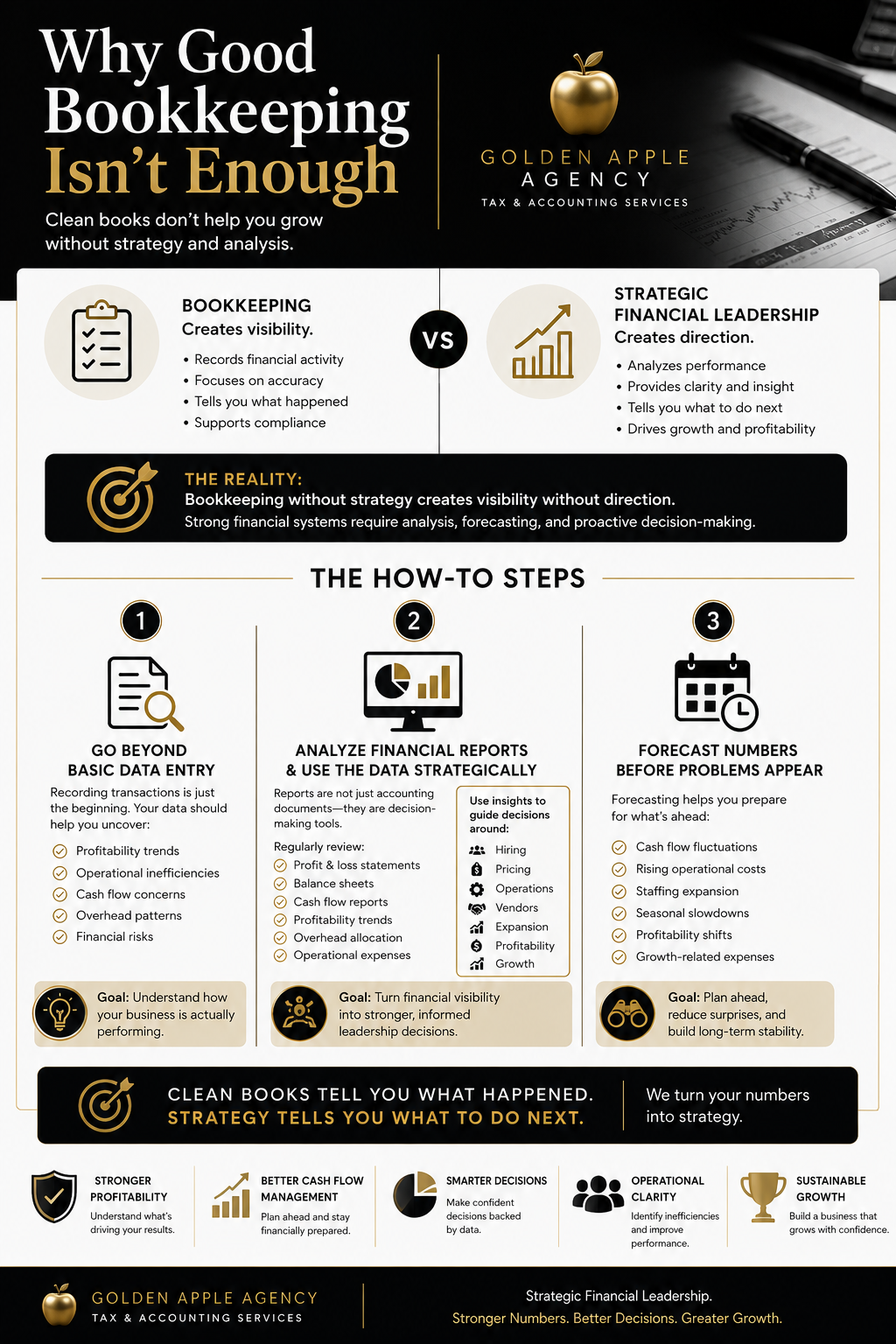
The Reality Check
Clean books alone do not create financial growth.
Many businesses have organized financial records while still operating without strategic clarity.
Without analysis and forecasting, bookkeeping becomes historical reporting instead of leadership guidance.
If your financial data is not helping you make better decisions, you are only using part of its value.
The goal is not simply staying organized.
The goal is using financial visibility to build stronger profitability, operational clarity, and long-term growth.
Are Your Numbers Creating Clarity — or Just Records?
Strong financial visibility creates stronger long-term outcomes.
At Golden Apple Agency Inc., we help high-income business owners and growing companies turn financial data into strategic decision-making.
Because sustainable growth requires more than bookkeeping — it requires financial leadership.
