
The 3 Financial Systems Every Practice Needs
The Direct Answer
Many growing medical practices focus heavily on growth.
More patients.
More staff.
More scheduling.
More operational demands.
But growth without financial systems often creates:
inconsistent cash flow
operational stress
financial confusion
reactive decision-making
profitability problems
As practices grow, complexity increases.
Without strong financial systems, growth can quickly become difficult to manage.
The practices that scale most effectively are usually not the ones operating with the most pressure.
They are often the ones operating with stronger financial structure.
Because sustainable growth requires systems — not just effort.
Strong practices are not built through constant reaction.
They are built through repeatable financial systems that support long-term operational stability.
The How-To Steps
1. Build a Strong Cash Flow System
Many practices generate strong revenue while still struggling with cash flow.
Because revenue and cash flow are not the same thing.
Without a clear cash flow system, practices often experience:
inconsistent operating balances
delayed vendor payments
payroll pressure
unexpected shortages
reactive financial decisions
Strong cash flow systems help practices:
monitor incoming revenue consistently
plan for operational expenses
prepare for slower seasons
reduce financial stress
improve long-term stability
Cash flow visibility creates stronger operational control.
The goal is not simply generating revenue.
The goal is maintaining healthy financial movement throughout the business.
2. Create a Proactive Tax System
Many practices only think about taxes during tax season.
But reactive tax management often creates:
larger tax bills
missed planning opportunities
poor cash flow preparation
financial surprises
inconsistent profitability
Strong tax systems involve:
ongoing tax planning
quarterly financial review
estimated tax preparation
entity structure evaluation
proactive deduction strategy
Tax planning should become part of operational leadership — not just year-end compliance.
The practices that operate most efficiently usually plan for taxes year-round.
Because proactive tax systems help protect profitability as businesses grow.
3. Implement Monthly Financial Review Systems
Many business owners collect financial data without reviewing it consistently.
But financial reports are not just accounting documents.
They are operational decision-making tools.
Practices should regularly review:
profit and loss statements
cash flow reports
profitability trends
overhead allocation
payroll patterns
operational expenses
Monthly financial review helps practices:
identify inefficiencies earlier
improve forecasting
monitor profitability
make cleaner decisions
manage growth more strategically
Without reporting systems, leadership decisions often become reactive instead of intentional.
The practices that scale sustainably are usually the ones reviewing their numbers consistently.
Because measurable visibility creates stronger leadership decisions.
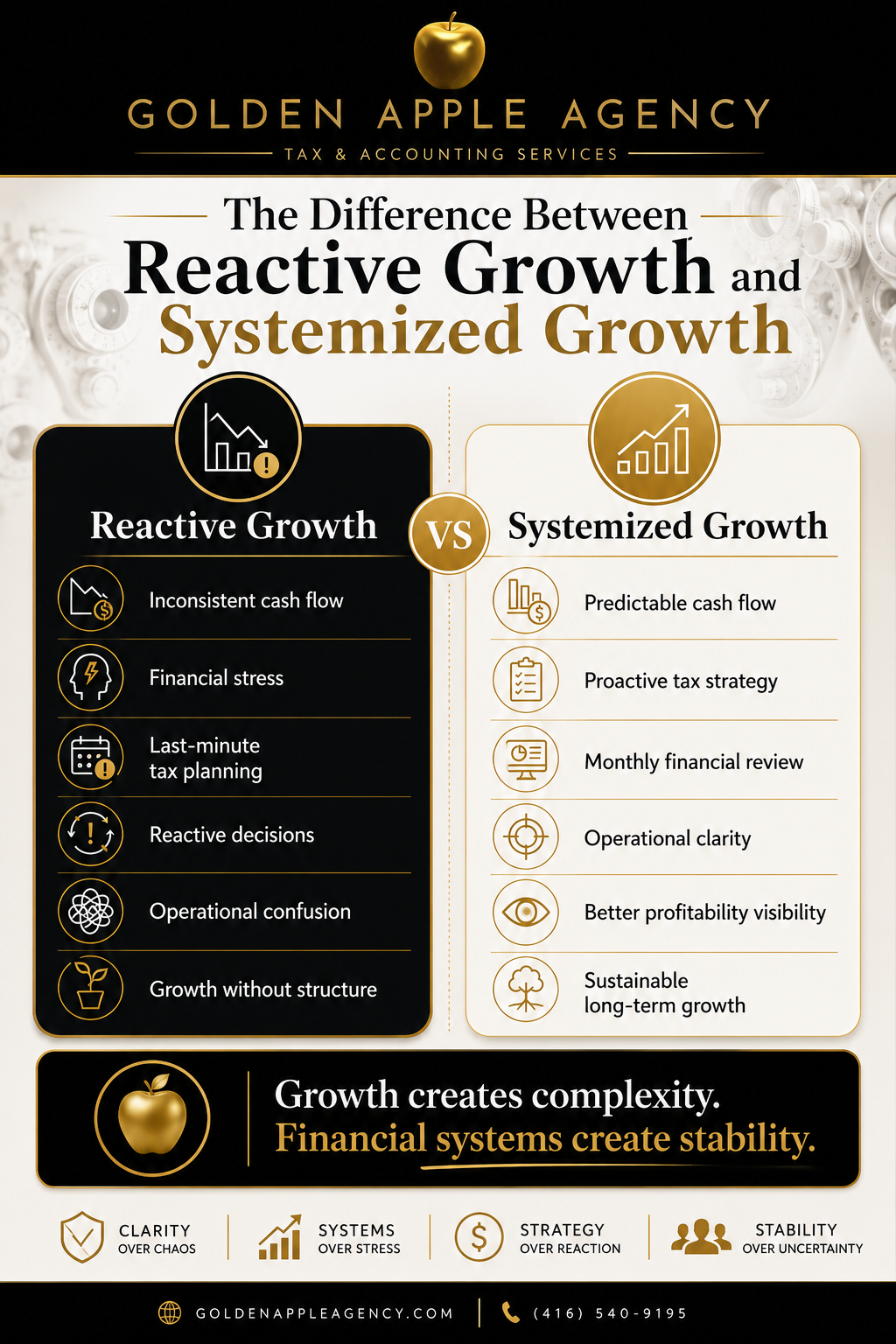
The Comparison
Disorganized Growth
Operates reactively
Struggles with cash flow consistency
Reviews finances infrequently
Experiences financial surprises
Makes decisions emotionally
Growth creates operational stress
Profitability becomes inconsistent
Systemized Growth
Uses structured financial systems
Maintains stronger cash flow visibility
Reviews financial data consistently
Plans proactively for taxes
Makes decisions strategically
Growth feels more manageable
Builds stronger long-term profitability
The Reality Check
Growth without systems eventually creates instability.
Many practices become busier every year while simultaneously becoming:
more overwhelmed
less efficient
financially reactive
operationally strained
Because growth alone does not create stability.
Systems create stability.
The goal is not simply building a bigger practice.
The goal is building a practice that operates efficiently, profitably, and sustainably as it grows.
Strong financial systems reduce chaos.
They create clarity, predictability, and stronger long-term decision-making.
Are Your Financial Systems Supporting Growth — or Creating Stress?
Strong financial systems create stronger long-term outcomes.
At Golden Apple Agency Inc., we help medical professionals and high-income business owners build proactive financial systems designed to support operational clarity, profitability, and sustainable growth.
Because scalable growth requires structure — not constant financial stress.
